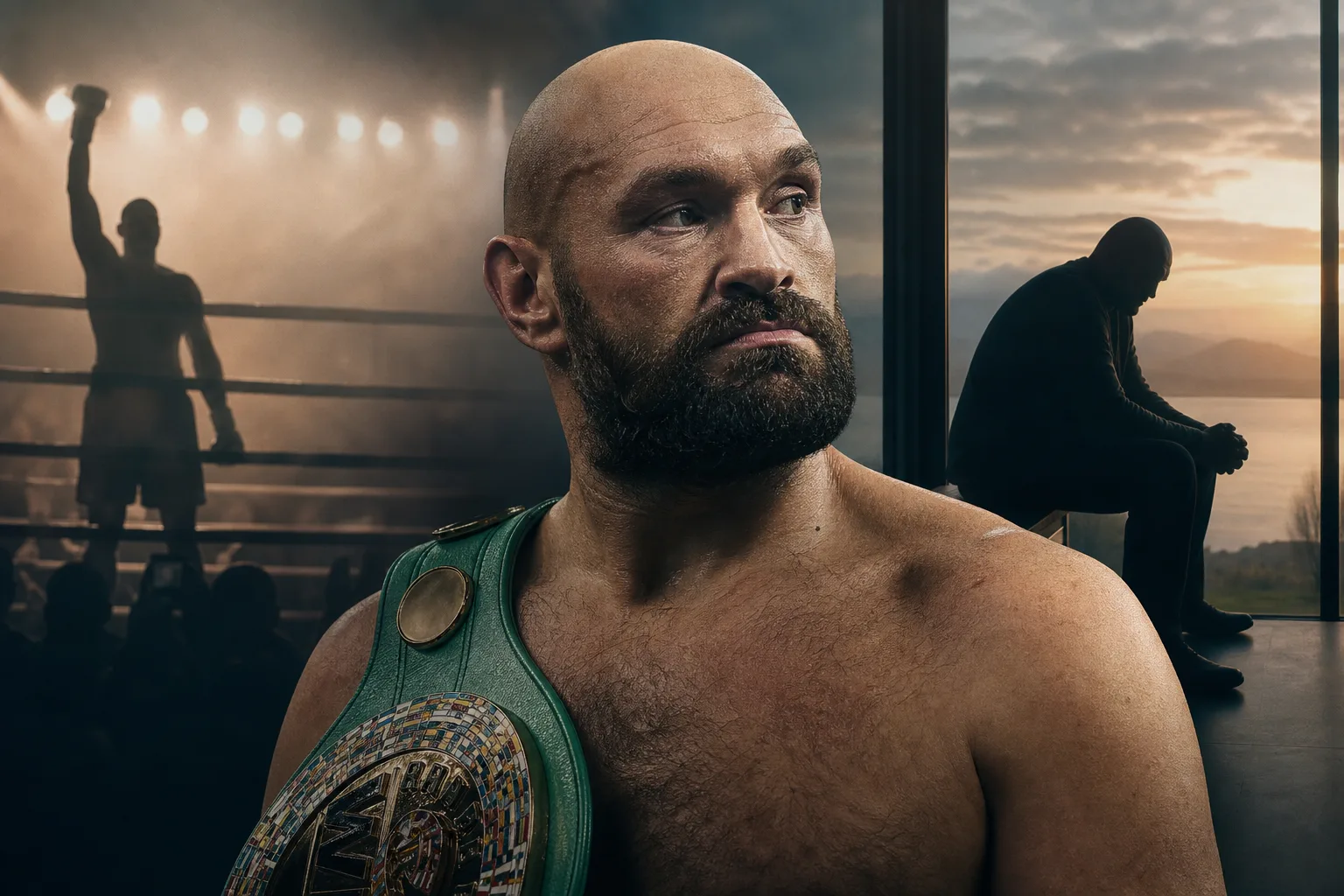
Tyson Fury is appearing in search traffic alongside a wave of reports about Hasim Rahman, but the supplied sources support a narrower story than the trend might suggest. The confirmed subject of the coverage is Rahman: a former heavyweight champion who once beat Lennox Lewis and is now being framed as a 53-year-old making a comeback bid.
The Fury link is real, but limited. One source headline says Rahman “says Fury is ‘done’,” yet the packet does not include the body of that report or enough surrounding context to explain exactly how that line was used. That distinction matters. A headline can move search interest without providing enough detail to support broader conclusions.
So the careful reading is simple: this is mainly a Rahman comeback story that has spilled into Tyson Fury search traffic because one headline connects the two names. The packet does not show a fresh Fury announcement, a new fight, or any verified development beyond that headline-level association.
What the source packet actually confirms
The strongest verified points are consistent across the provided sources. Boxing News Online describes Rahman as a former heavyweight champion who beat Lennox Lewis and says he vows to win back a title ahead of a return at 53. Il Messaggero also describes him as a former world champion who defeated Lewis and says he is eyeing a historic heavyweight return.
Those details establish the core of the story. Rahman is not presented as an active titleholder. He is being reported as a former champion making an ambitious attempt to return to the division at an age when few boxers are still chasing major titles. That is the basis of the attention.
The packet also confirms one additional point: the existence of an MSN headline that ties Rahman to Fury with the wording, “Rahman, 53 and making a comeback, says Fury is ‘done’.” Because no summary is available for that item, the packet supports the headline itself but not the underlying context or intent behind the remark.
Why Fury is part of the conversation
Based on the packet alone, Fury appears to be in the conversation because his name is attached to a claim made in coverage about Rahman’s comeback. That does not mean Fury has issued a new public statement in the supplied material. It also does not mean Rahman’s return has been formally linked to a fight with him.
This is an important distinction for readers following sports trends. Search interest often grows when a headline uses the name of a current star in the framing of an older athlete’s comeback. The result can be a burst of curiosity that outpaces the actual reporting.
In this case, the packet supports one straightforward conclusion: Fury’s trend is likely being driven by headline association rather than by a separate, well-documented Fury event in the material provided. Anything beyond that would require additional reporting.
How the outlets frame Rahman differently
The three sources in the packet emphasize different angles, which helps explain why the story feels larger than a single sentence.
- Boxing News Online leans into the declaration and the comeback challenge, focusing on Rahman’s vow to win back a title and the quote “I will do it.”
- Il Messaggero emphasizes the dramatic, almost cinematic quality of the return and calls it a “historic heavyweight return.”
- MSN introduces Tyson Fury into the framing with the headline about Fury being “done,” but the packet does not supply the underlying article text.
These are not conflicting accounts, but they are differently weighted accounts. The first two sources are primarily about Rahman’s ambitions. The third source adds a second name and therefore broadens the headline appeal. That is enough to explain the trend, but not enough to justify stronger claims.
Why the comeback angle gets attention
Boxing journalism often gives extra weight to return stories because they combine history, identity, and uncertainty. A former champion returning after years away is not just another bout announcement; it is a story about reputation and unfinished business. Rahman’s status as the man who beat Lennox Lewis makes that history easy to summarize and easy to market.
Still, the packet does not say that a fight has been finalized. It does not name an opponent. It does not give a venue or a date. It does not show a sanctioning body’s confirmation. Those omissions matter because a stated desire to return is not the same thing as a completed return.
That means the most accurate way to describe the coverage is as ambition, not outcome. Rahman is being reported as wanting another run. Whether that becomes a sanctioned heavyweight bout is not established in the provided material.
What is supported, and what is not
To keep the picture clean, it helps to separate confirmed facts from what the packet only hints at.
Supported by the packet: Rahman is a former heavyweight champion. He beat Lennox Lewis. He is 53 in the reporting. He is being described as making a comeback bid or eyeing a return. One headline connects him to Tyson Fury with the phrase “Fury is ‘done’.”
Not supported by the packet: a new Fury development, a formal comeback fight announcement, a specific opponent, a confirmed title path, or the full context of the “done” remark.
This is the point where careful editing matters. A trend story can easily overstate how much has actually happened. Here, the underlying reporting is real, but it is narrower than the headline noise around it.
How readers should interpret the search spike
The most reasonable interpretation is that Tyson Fury’s name is benefiting from headline proximity. Rahman’s comeback story supplies the nostalgia and the heavyweight-history angle; Fury supplies the current-star name that broadens attention. Together, they create a search-friendly combination even if the actual substance is limited.
That is a common pattern in sports coverage. A veteran name plus a famous current fighter can produce more clicks than the underlying facts would otherwise generate. Readers then arrive expecting a major update and find that the real story is more modest: one man is trying to make a return, and another man’s name appears in a headline attached to that narrative.
The packet does not support more than that. So the safest reading is not “something big has happened to Fury,” but “Fury’s name has been pulled into a comeback story about Rahman.”
What would make the story stronger
If more reporting emerges, the useful details would be the ones that convert ambition into substance. For example, an actual opponent, a fight date, or a sanctioned bout would move the story from aspiration to event. Likewise, the full MSN article would help clarify whether the “Fury is done” wording reflects a quote, a paraphrase, a broader comment, or simply a headline shorthand.
Until then, readers should be cautious about reading too much into the current trend. There is no need to guess at motives or assume a larger boxing development when the packet does not provide one.
That restraint is especially important in heavyweight boxing, where familiar names can make even a thin news item feel more significant than it is. In this case, the reporting is straightforward if kept in its proper lane: Rahman is the central figure, Fury is a headline-level reference, and the rest remains unconfirmed.
Bottom line
Tyson Fury appears to be trending because his name is attached to coverage of Hasim Rahman’s comeback attempt. The confirmed story is about Rahman: a former heavyweight champion who beat Lennox Lewis and is now being reported as wanting to return at 53. The Fury connection is limited to a headline in the packet, and the supplied material does not provide enough context to expand on it.
For readers, the useful takeaway is to treat this as a Rahman comeback story with a headline-driven Fury link, not as evidence of a new Fury development. The difference is small in wording but important in fact-checking.