At a glance
Josh Hokit has become the subject of fresh attention after multiple outlets described an unusual moment at a UFC weigh-in tied to a White House fight card. In the reporting supplied here, the central details are consistent: Hokit was on stage for the official weigh-in, appeared to expel some kind of liquid or vomit, and then made a remark suggesting he had been drinking. What the sources do not establish is equally important. None of them confirm intoxication, identify the substance with certainty, or provide an official explanation from the UFC or event organizers.
That distinction matters because viral sports clips often travel faster than verified context. In this case, the reporting gives readers enough to understand why the moment drew attention, but not enough to make stronger claims than the evidence supports.
What the sources say happened
Yahoo Sports described the incident in its headline as a UFC White House fighter appearing to throw up at weigh-in, quoting the reported response: “So what? I was drinking.” The phrasing is careful: it presents the event as an apparent act, not a confirmed medical or disciplinary fact.
The Times of India used more dramatic language, saying the heavyweight “stunned reporters” after appearing to vomit on himself during the official weigh-in, then making a “bizarre admission” moments later that he might have been drinking the night before. GiveMeSport also framed the moment as a fighter weighing in “drunk” and said the footage was unusual.
Across the three sources, the basic outline is the same. Hokit’s weigh-in became the story because his behavior looked out of place in a setting that is usually brief, procedural, and tightly controlled. The reporting does not, however, move beyond appearance and remark into proof.
Supported by the packet: the event took place during a weigh-in, Hokit was the fighter involved, the moment was publicly visible, and the comment about drinking was reported by outlets covering the clip.
Not established by the packet: whether the liquid was vomit, whether he was actually drunk, whether the moment was deliberate, and whether an official statement clarified anything afterward.
Who is Josh Hokit in this reporting?
The packet portrays Hokit as a controversial UFC prospect or fighter. Yahoo Sports goes a bit further, saying he has “made a name for himself by playing different characters.” That line suggests he already had a reputation for theatrical or attention-grabbing behavior before this weigh-in incident began circulating.
The same Yahoo report says Hokit was added to Sunday’s fight card at Donald Trump’s request. That detail places the incident in a highly specific setting: a White House-associated UFC card that already had an unusual political backdrop. The sources provided here do not explain the broader event in detail, and it would be a mistake to add background that is not in the packet.
For that reason, the safest way to describe Hokit in this article is narrowly. He is presented in the coverage as a controversial UFC fighter or prospect whose stage presence at the weigh-in created a new round of attention. Anything beyond that would go past the supplied reporting.
Why a weigh-in moment becomes a story
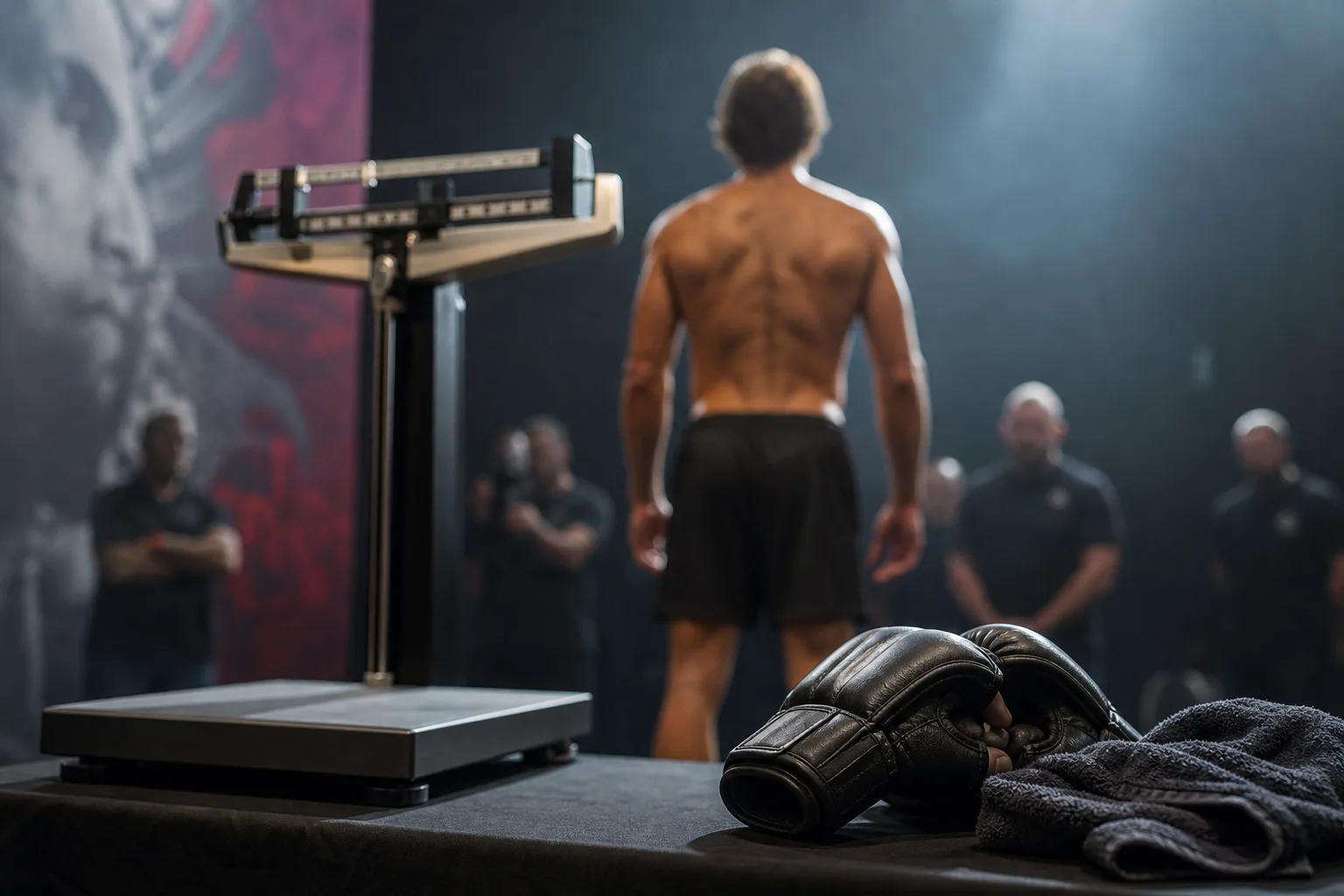
To readers who do not follow mixed martial arts closely, the term “weigh-in” may sound routine because, in most cases, it is. Fighters step on a scale, meet the required limit for their bout, and often face off for cameras afterward. The event is part of the sport’s structure, but it is also a media moment. That means anything unusual can become news very quickly.
A weigh-in incident draws attention for a few simple reasons. First, it happens in public, usually under bright lights and in front of cameras. Second, fighters are expected to be composed and on message, so an apparent lapse stands out immediately. Third, the setting itself is already part of the show. A ceremonial or promotional atmosphere can make even a brief moment feel larger than it otherwise would.
In this case, the moment appears to have broken the normal script of a weigh-in. Instead of a standard scale check, the footage reportedly showed something that looked like vomiting or spitting up liquid, followed by a joking or dismissive reference to drinking. That combination is what made the clip easy to describe, easy to share, and difficult to interpret with confidence.
What readers should and should not conclude
The strongest lesson from the available reporting is that a striking clip is not the same as a complete account. Social media footage can capture the visual part of an event, but it rarely settles questions about intent, condition, or context.
Based only on the packet, readers can say the following with confidence:
- Josh Hokit was present at a UFC weigh-in connected to a White House fight card.
- Multiple outlets described the moment as odd, chaotic, or bizarre.
- The reports say he appeared to expel liquid on stage.
- He was quoted or paraphrased as joking that he had been drinking.
Readers should avoid going further than that. The sources do not verify alcohol use, and they do not identify the liquid involved. They also do not show an official ruling, disciplinary action, or medical finding. A comment about drinking may be flippant, performative, or self-deprecating, but it is not proof of impairment.
This is the core distinction in responsible coverage: a reported remark can be included, but it should not be inflated into a confirmed explanation.
The role of tone in the coverage
The three outlets in the source packet present the same basic episode in noticeably different tones. Yahoo Sports is the most restrained, using “appears to throw up” and pairing it with a quoted line about drinking. The Times of India leans into spectacle, using phrases such as “wild moment,” “humiliates himself,” and “shock vomit stunt.” GiveMeSport takes a similarly sensational angle by emphasizing the oddness of a fighter weighing in “drunk.”
That range matters because headline tone can shape how readers interpret the same underlying event. A restrained headline invites caution. A more dramatic one suggests embarrassment or provocation. But in all three cases, the underlying evidentiary limit is the same: the outlets are describing a clip and the reaction around it, not presenting a full factual finding.
When a story spreads in that environment, the smartest reading is to separate language used for emphasis from what the reporting actually proves. The packet supports the existence of an embarrassing-looking weigh-in moment. It does not support stronger claims about motive or substance use.
Why the incident drew so much attention
The interest around Hokit’s weigh-in seems to come from the combination of three elements: a public sports ritual, an unusual bodily reaction, and a politically charged event setting. Any one of those might have been enough to make the moment circulate online. Together, they gave the clip a built-in audience.
There is also a simple human reason these moments spread: they are easy to understand at first glance. Viewers do not need much context to recognize that something unexpected happened. That makes the clip instantly legible, even when the facts remain incomplete. In other words, the moment is searchable because it is visually clear and verbally ambiguous at the same time.
That ambiguity is why the sources keep returning to phrases like “appears,” “reported,” and “might have been.” Those qualifiers are not filler. They are the boundary between observation and conclusion.
What remains unclear
The supplied sources leave several questions unanswered. They do not say whether Hokit continued normally after the weigh-in. They do not explain whether anyone on site commented on the incident in real time. They do not confirm whether the liquid was vomit, saliva, water, or something else. And they do not provide an official statement from UFC representatives, event organizers, or Hokit himself beyond the reported drinking remark.
That does not make the incident unimportant. It just means the reporting is still partial. A short clip may be enough to show that a strange moment occurred, but not enough to establish why it happened. For now, the most accurate way to describe the story is as a reported weigh-in incident involving Josh Hokit that generated attention because of how unusual it looked and how casually he reportedly dismissed it.
Bottom line
On the evidence in the source packet, Josh Hokit’s weigh-in became news because it looked like he threw up or spit up liquid on stage and then responded with a remark about drinking. The sources agree on the broad shape of the moment, but they stop short of proving intoxication or identifying the substance involved. They also frame Hokit as a controversial figure already known for playing different characters, which helps explain why the clip attracted so much attention.
If you are trying to understand the story without the noise, the cleanest summary is this: a UFC fighter at a White House-associated weigh-in made a public appearance that multiple outlets described as bizarre, and the reporting leaves the exact cause unresolved.
Sources and further reading
Yahoo Sports: UFC White House fighter appears to throw up at weigh-in: ‘So what? I was drinking’
GiveMeSport: UFC Fighter Weighs In ‘Drunk’ For Bout on White House Card - The Footage is So Bizarre